

Cavity wall insulation involves filling the gap between the inner and outer walls with insulating material to make a property more energy efficient. Many homes built in the UK from the 1920s onwards were constructed with cavity walls, making this one of the most effective ways to reduce heat loss without major building work. This is because by insulating this empty space, you can keep more warmth inside your home during the colder months. This reduces the amount of money you need to spend on energy bills and heating, by keeping your home at a comfortable temperature all year round. But how does this work? And what can you expect from cavity wall insulation?
Understanding cavity walls
Unlike older solid wall properties, cavity wall homes are built using two layers of brick or block with a gap, known as a cavity, between them. This design helps prevent rain from penetrating the building, but if the cavity is left empty, it can also allow heat to escape more easily. This is where cavity wall insulation can help. By filling this gap with insulating material, you can create a barrier that slows the movement of heat through the walls, improving energy efficiency.
However, it’s important to note that not every property has cavity walls, so identifying the type of construction is an important first step before considering insulation.

How cavity wall insulation is installed
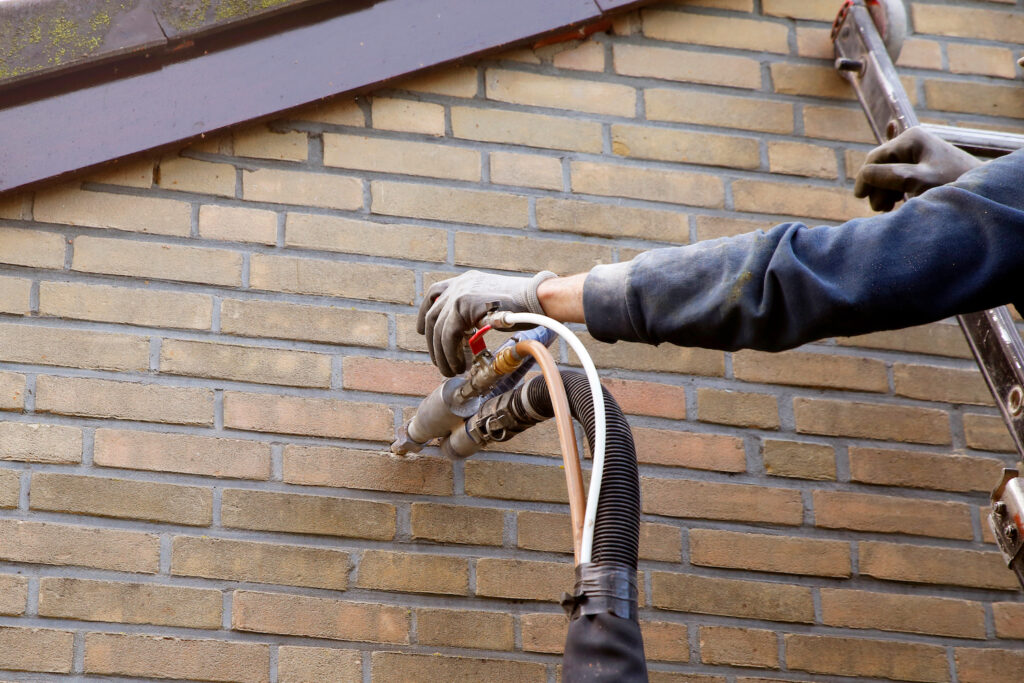
One of the reasons cavity wall insulation is so popular is that the installation process is generally quick and causes very little disruption. A trained installer will drill a series of small holes into the external walls before injecting insulating material into the cavity. Once the cavity has been completely filled, the holes will be carefully sealed to match the existing brickwork or render. This process can often be completed within a day, from beginning to end, although the exact timescale will depend on the size of the property.
What are the different types of cavity wall insulation?
Several different materials can be used to insulate cavity walls and the most suitable option will depend on the property and the installation method being used. Each option is designed to reduce heat transfer while filling the cavity evenly and effectively. Some of the most common insulation materials include:
- Mineral wool fibres
- Expanded polystyrene beads
- Polyurethane foam in certain applications
What are the benefits of cavity wall insulation?
For suitable properties, cavity wall insulation offers a range of practical advantages beyond simply reducing heat loss. These benefits include:
- Lower heating bills through improved energy efficiency
- A warmer and more comfortable home
- Reduced heat escaping through external walls
- A smaller carbon footprint due to lower energy use
- Minimal disruption during installation

Is every home suitable?
Although cavity wall insulation is highly effective for many properties, it is not suitable for every home. As a result, before any installation begins, a professional survey is usually carried out to assess factors such as:
- The width and condition of the cavity
- The age and construction of the property
- Exposure to driving rain
- The condition of the external walls
- Any existing damp or structural issues
Older properties built before the 1920s are more likely to have solid walls rather than cavity walls, meaning a different insulation solution may be required, like solid wall insulation.
So what is cavity wall insulation?
Cavity wall insulation is a practical way of improving the energy efficiency of homes built with cavity walls. By filling the gap between the inner and outer walls with insulating material, it helps reduce heat loss, improve comfort and lower the amount of energy needed to heat the property.
If your property has suitable cavity walls, installing cavity wall insulation can be one of the most effective ways to improve its energy efficiency and make your home more comfortable all year round.
If you’re looking for a reputable, trusted team for your home insulation, get in touch with ECO Home Insulation today.