

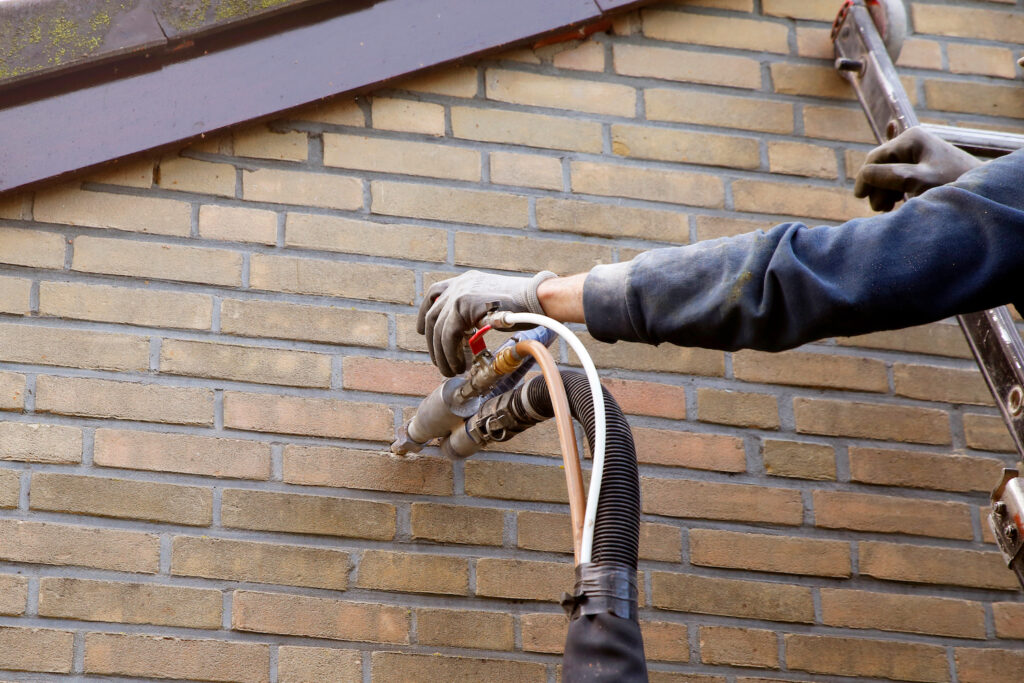
Cavity wall insulation is one of the most effective ways to improve energy efficiency in UK homes. If your property was built after the 1920s, it probably has cavity walls, which consist of two layers of brick or block with a gap in between. Unfortunately, if this gap is left uninsulated, heat can escape quickly. But with cavity wall insulation, this problem is easily fixed. So how can cavity wall insulation improve energy efficiency? And what do you need to know about cavity wall insulation for your property?
What is cavity wall insulation?
A cavity wall is made up of two “skins” with a hollow space between them. This cavity was originally designed to prevent rain from penetrating the inside of the house, but it also creates a pathway for heat to escape.
To prevent this, cavity wall insulation involves injecting insulating material into this gap from the outside. Small holes are drilled into the mortar joints, the insulation is inserted, and the holes are then sealed. The most common materials for this process include:
- Mineral wool (glass or rock fibre)
- Polystyrene beads
- Foam insulation
Once installed, the insulation forms a barrier that slows down the movement of heat through the walls.

How does cavity wall insulation reduce heat loss
If your home is uninsulated, a significant amount of heat will be lost through the walls when warm air from inside the house transfers heat through the wall structure, and then escapes outside. In fact, for un-insulated homes, about a third of all heat is lost this way. This means the heating system has to work harder to maintain a comfortable temperature, increasing your energy bills.
But by installing cavity wall insulation, you can reduce this heat transfer by trapping air within the insulating material. Because air is a poor conductor of heat, this slows down the rate at which warmth escapes. As a result:
- Rooms stay warmer for longer
- Less energy is needed to heat the home
- Heat is distributed more evenly throughout the property
This improved thermal performance is one of the main reasons cavity wall insulation is so widely recommended.
Lower energy bills
Another benefit of cavity wall insulation is the reduction in energy bill cost. Because less heat escapes, you will typically use less energy for heating. This leads directly to lower energy bills, though the exact savings depend on a range of factors such as:
- The size of the property
- The existing level of insulation
- Heating habits
Improved comfort
Energy efficiency is not just about saving money as it also affects how a home feels. Insulated walls help to maintain a more consistent indoor temperature, reducing cold spots and draughts. This can make a noticeable difference in everyday comfort, especially during colder months in rooms that were previously difficult to heat.
Quick and relatively simple installation
Another of the advantages of cavity wall insulation is that it is usually quick to install. In many cases, the work can be completed within a day, with minimal disruption to your daily routine or household. Because the insulation is added from the outside, there is no need for major internal changes. This makes it an attractive option compared to more invasive upgrades.
Is cavity wall insulation suitable for every home?
Cavity wall insulation is suitable for many UK homes, but not all. It is typically appropriate for properties built after the 1920s with standard cavity walls. However, it may not be recommended if:
- The property is exposed to severe weather or driving rain
- The walls are in poor condition
- There are existing damp problems
This means that a professional assessment is usually needed to determine whether the installation is suitable.
Taking a wider approach to your home insulation
While cavity wall insulation is highly effective, it works best when combined with other energy-saving measures. These may include:
- Loft insulation
- Draught-proofing
- Efficient heating systems
Taking a whole-house approach can maximise the benefits and lead to greater overall energy efficiency.
So, how can cavity wall insulation improve energy efficiency?
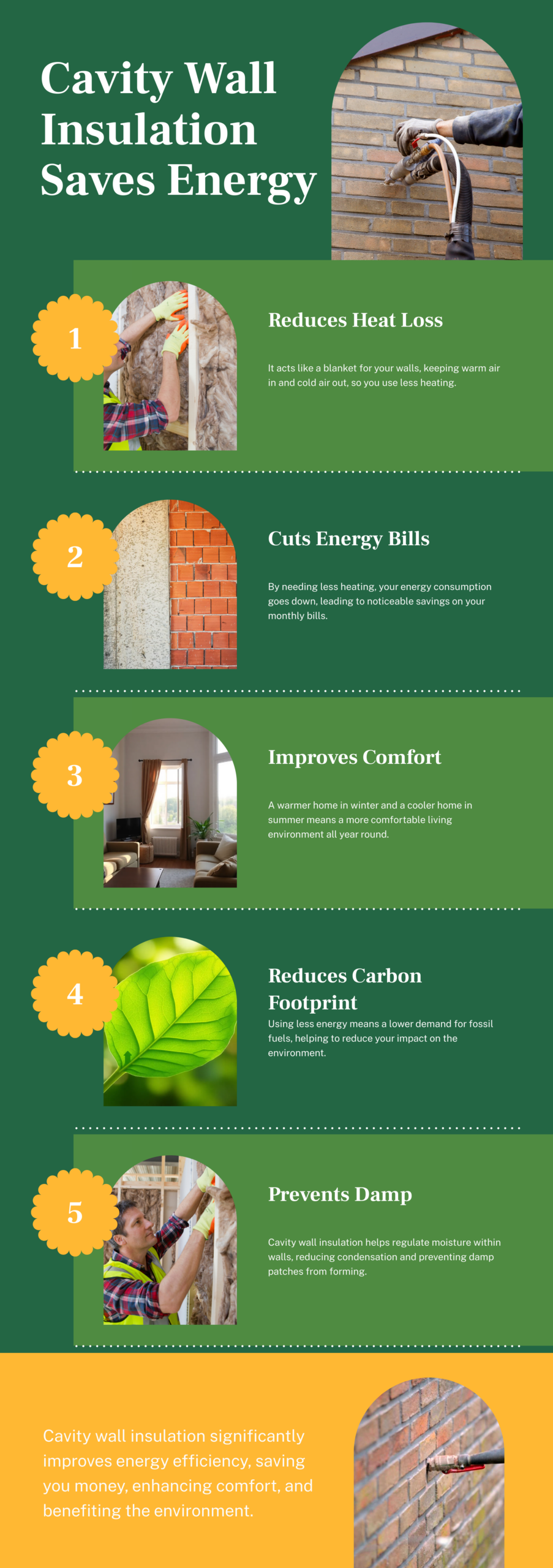
Cavity wall insulation improves energy efficiency by reducing heat loss through the walls, helping homes stay warmer with less energy. It can also lower heating bills, improve comfort and reduce carbon emissions, all with relatively simple installation.
For many properties, cavity wall insulation is one of the most practical and cost-effective ways to improve energy performance. As part of a broader insulation strategy, it can play a key role in creating a warmer, more efficient home.
If you’re looking for a reputable, trusted team for your cavity wall insulation, get in touch with ECO Home Insulation today.