

Designed to keep the heat in, insulation can make a big difference to your household heating bills in the winter, and help keep your indoor temperature comfortable all year round. But the cost of this is something that can be concerning if you are thinking about making your home more energy efficient. The good news is that there are government-backed schemes, as well as other forms of support, that are available for eligible households. However, funding is not automatically available to every household, and eligibility can depend on factors such as your income, where you live, your property’s Energy Performance Certificate (EPC) rating and the type of insulation required. So how can you understand the different grants available, and are there any that would be suitable for you?
What insulation grants are available?
There are a number of different government-backed programs that provide support for UK households.
If you are in England, one of the current options is the Warm Homes: Local Grant. This is delivered through participating local authorities and can provide eligible households with energy efficiency improvements, including loft, wall and underfloor insulation.
There is also ECO4, which requires participating energy suppliers to support eligible households with energy efficiency and heating improvements. Insulation can form part of the improvements available through the scheme.
The support available can vary depending on the scheme and your individual circumstances.
Who could be eligible for insulation funding?
There is no simple threshold that applies to everyone, as eligibility differs between schemes.
For example, the Warm Homes: Local Grant is aimed at low-income households living in privately owned homes in England. The property will generally need to have an EPC rating between D and G, while household income and other eligibility criteria may also apply.
Other schemes, including ECO4, have their own eligibility requirements and may consider factors such as household circumstances, benefits, property characteristics and energy efficiency.
As a result, it is important not to assume that you are either eligible or ineligible based on one factor alone.
What types of insulation could be covered?
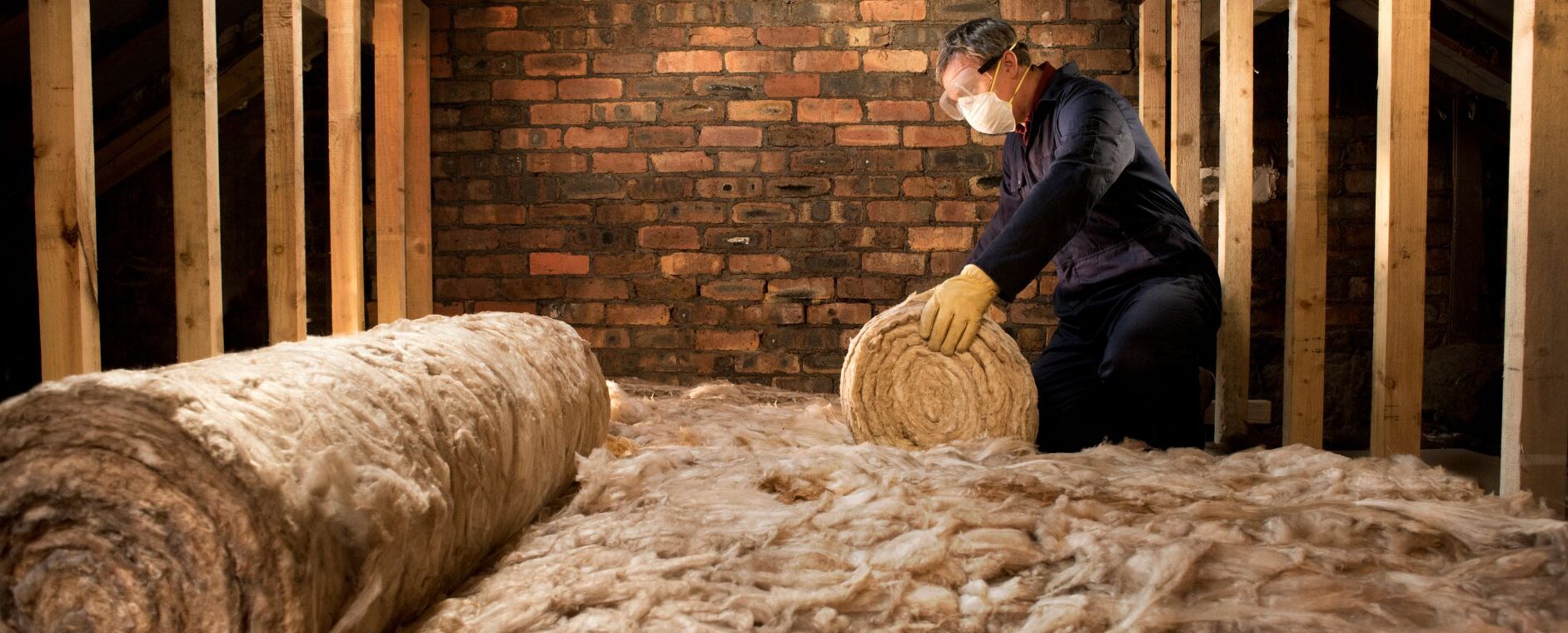
Depending on the scheme and the results of a professional property assessment, different types of energy efficiency improvements may be available. These can include:
- Loft insulation
- Cavity wall insulation
- Underfloor insulation
- Solid wall insulation where appropriate
Other energy efficiency improvements
The Warm Homes: Local Grant, for example, can support improvements such as wall, loft and underfloor insulation, alongside certain low carbon heating measures.
Rather than being able to choose your own form of insulation, the work recommended will depend on the results of a professional assessment of your property.
What happened to the Great British Insulation Scheme?
When searching online for insulation grants, you may have heard of the Great British Insulation Scheme (GBIS). This was designed to help households improve energy efficiency and was available to a wider range of properties, including some homes with EPC ratings of D to G. However, the scheme officially ended on 31 March 2026.
This is important because there are still websites and older articles online referring to GBIS as though applications are currently open, when this isn’t true. As a result, if you’re looking for funding now, it is better to check the latest government guidance and current schemes rather than relying on older information.
Can you get free insulation?
In some circumstances, eligible households may be able to have insulation installed at little or no cost.
For example, under the Warm Homes: Local Grant, eligible households can receive agreed energy efficiency improvements without having to pay for the work arranged through their local authority. However, landlords may need to contribute towards improvements in some circumstances.
Other schemes may operate differently, and support is not necessarily guaranteed simply because a household meets some of the eligibility criteria.
This is why it is important to establish exactly what is being funded, what contribution may be required and which improvements are included before agreeing to any work.

Does location make a difference?
Yes. The insulation support available can vary depending on where you live in the UK.
The Warm Homes: Local Grant, for example, is specifically available in England. Scotland, Wales and Northern Ireland have their own support programmes and eligibility requirements.
Your local authority can also play an important role in delivering or referring households for certain energy efficiency schemes.
This means that two households with similar properties and circumstances could potentially have access to different forms of support depending on their location.
So, are there grants available for home insulation in the UK?
Yes, there are government-backed schemes that can help eligible households with insulation and other energy efficiency improvements. However, there isn’t a single grant available to everyone, and the schemes available depend on your circumstances and where you live.
If you’re looking for a reputable, trusted team to help with your home insulation, get in touch with ECO Home Insulation today.