

When it comes to making your home more energy efficient, there are a range of different options to choose from. Loft insulation, solar panels and cavity wall insulation are some of the most popular options. But how does cavity wall insulation work? And would this be a good fit for your property?
So how does cavity wall insulation work?
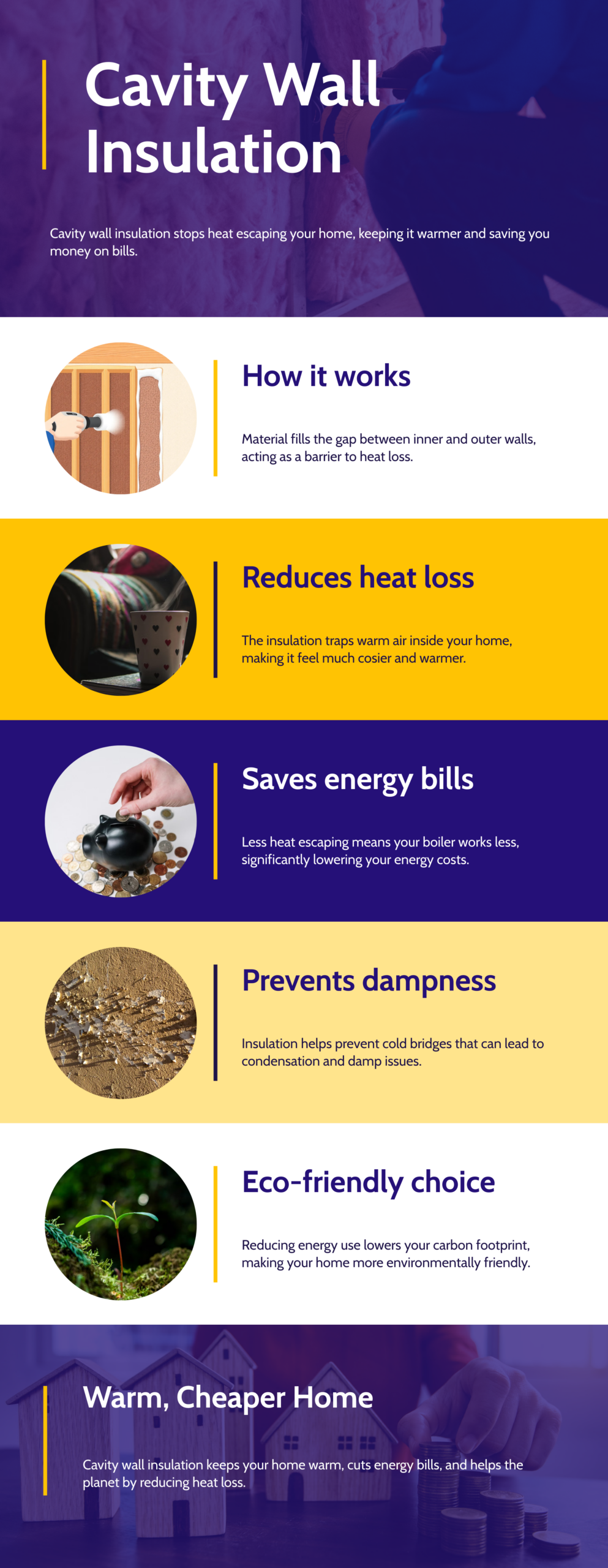
Cavity wall insulation works by filling the empty space between the two layers of an external wall with insulating material. This reduces the amount of heat that can pass through the wall, helping your home stay warmer for longer and reducing the energy needed for heating.
If your house was built from the 20th Century onwards, it is highly likely to have cavity walls, as opposed to the solid walls used in earlier years, and cavity wall insulation can be a great way to reduce energy bills.
What is a cavity wall?
A cavity wall usually consists of two separate layers, or leaves, with a space between them. The outer layer is exposed to the weather, while the inner layer forms part of the structure of the home. The gap between these layers is known as the cavity.
An uninsulated cavity provides some protection against heat loss and moisture, but it can still allow warmth to pass through the wall. Adding insulation to this space creates a much more effective thermal barrier.
How is the cavity filled?
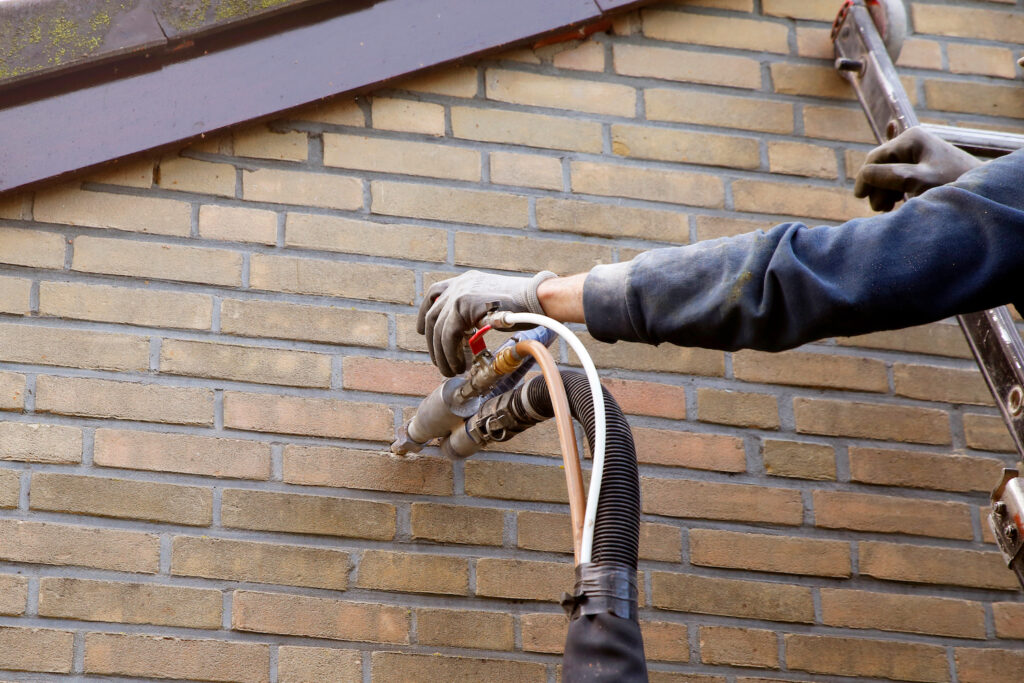
Cavity wall insulation is usually installed from the outside of the property.
Before any work begins, the walls should be inspected to establish whether the property is suitable. This can include checking the cavity width, condition of the brickwork and exposure of the property to wind-driven rain.
If the wall is suitable, small holes are drilled into the external brickwork at carefully selected positions. Insulating material is then injected or blown into the cavity through these openings. Once the cavity has been filled, the holes are sealed, leaving the external wall looking largely unchanged.
The installation process is generally much less disruptive than fitting insulation to the inside of the property.
What happens to heat once the cavity is insulated?
Heat naturally moves from warmer areas towards colder areas. During winter, this means heat inside your home will try to pass through the external walls towards the colder outside air. Cavity wall insulation slows this process. By filling the gap with a material that has low thermal conductivity, the insulation makes it more difficult for heat to travel through the wall. This means more of the warmth produced by your heating system remains inside the property rather than being lost through the external walls. Over time, this can help:
- Reduce heat loss
- Lower energy consumption
- Improve indoor comfort
- Reduce the demand placed on your heating system
What materials can be used?
Different materials can be used to fill cavity walls, depending on the property and the installation requirements. Common examples include:
- Mineral wool fibres
- Expanded polystyrene beads
- Other specialist insulation systems
The material needs to be capable of filling the cavity effectively while providing suitable thermal performance. This means that the right product isn’t necessarily the same for every property, which is why a proper assessment should take place before installation.
What difference can it make?
Once the cavity has been insulated, the external walls provide a much stronger barrier against heat loss. The difference may be particularly noticeable in homes that previously had little or no wall insulation. Rooms can feel warmer, and temperatures may remain more consistent when the heating is turned off. The potential benefits of cavity wall installation include:
- A reduction in heat escaping through external walls
- Improved thermal comfort
- Potentially lower heating costs
- Greater overall energy efficiency
- Reduced carbon emissions from lower energy use
The exact results will depend on the property, existing insulation and how efficiently the home is heated.
How long does cavity wall insulation take to install?
One of the advantages of cavity wall insulation is that installation is usually relatively quick.
Because the insulation is installed from outside, there is no need to remove internal walls, flooring or plasterwork. The number of holes required will depend on the size and construction of the property.
Once the insulation has been installed, the holes are filled and finished to blend with the existing brickwork as closely as possible. This makes cavity wall insulation a relatively low-disruption improvement compared with some other forms of wall insulation.
If you’re looking for a reputable, trusted team to help improve your home’s cavity wall insulation, get in touch with ECO Home Insulation today.