

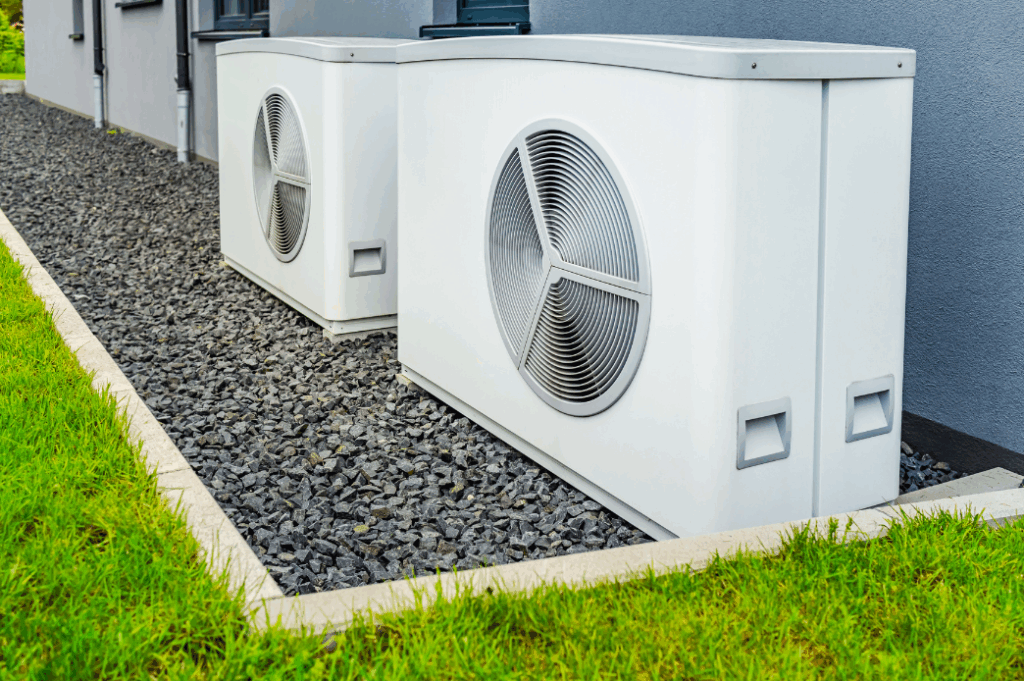
An air to air heat pump is a renewable heating and cooling system that transfers heat between the outside air and the inside of a home. Instead of generating heat by burning fuel, it moves existing heat from one place to another using a refrigeration cycle. This makes it an energy-efficient alternative to traditional electric heaters or fossil fuel-based heating systems. As these systems are becoming increasingly popular in the UK, you might be wondering how does an air to air heat pump work? And would this be right for your household?
So how does an air to air heat pump work?
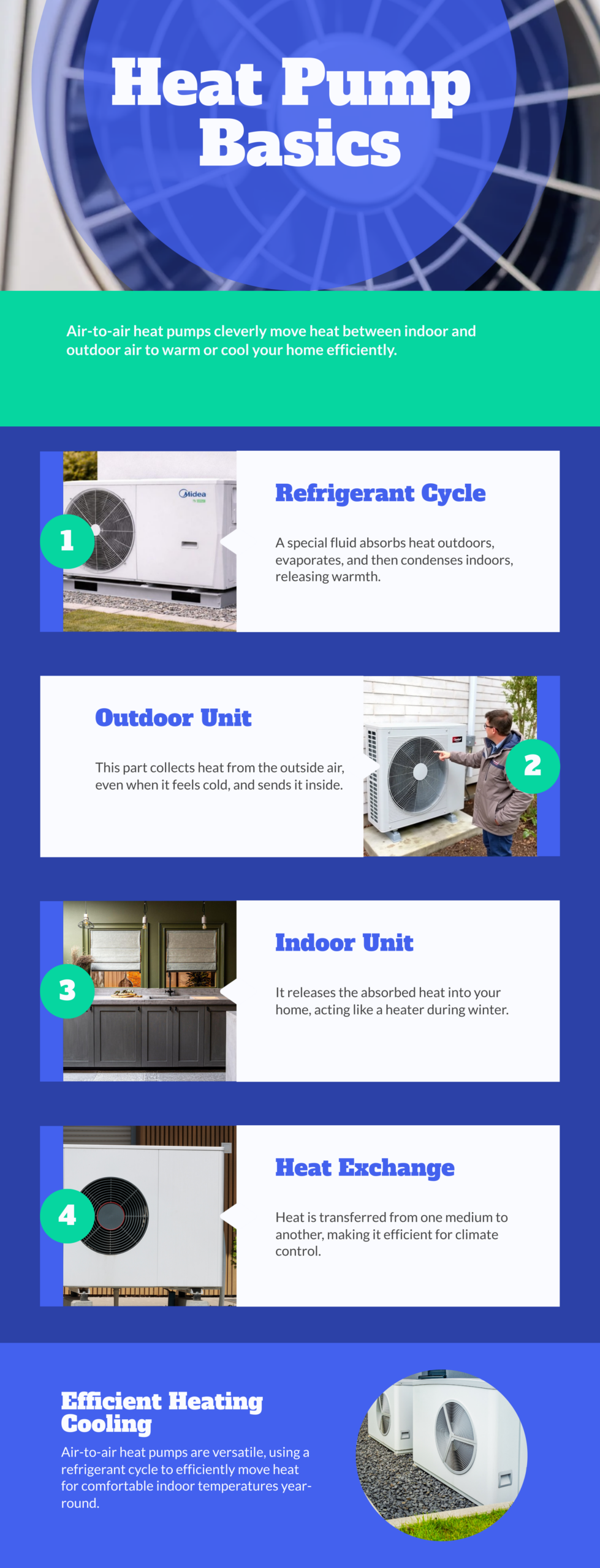
At its core, an air to air heat pump works by extracting heat energy from the outside air and using it to warm indoor spaces. Even when the outside temperature feels cold, there is still usable heat energy in the air. The system works in a continuous cycle made up of four main stages:
- Evaporation
- Compression
- Condensation
- Expansion
The heating process explained
In heating mode, the system absorbs heat from the outside air using an outdoor unit containing a refrigerant fluid. This refrigerant has a very low boiling point, which allows it to absorb heat even in cold weather. Once the heat is absorbed, the refrigerant turns into a gas and is compressed by a compressor. Compressing the gas increases its temperature significantly.
This hot gas then moves into the indoor unit, where the heat is released into the home through a fan system, warming the air inside your living space.
The refrigerant then cools down, returns to a liquid state, and the cycle begins again.
Cooling function in summer
One of the key advantages of an air to air heat pump is that it can also work in reverse during warmer months. In cooling mode, the system extracts heat from inside the home and transfers it outside. This means the same system can:
- Heat your home in winter
- Cool your home in summer
- Maintain a comfortable indoor temperature all year round
What are the key components of the system?
An air to air heat pump system typically consists of:
- An outdoor unit, which extracts or releases heat
- One or more indoor units, which distribute warm or cool air
- Refrigerant pipes connecting the system
- A compressor that increases the temperature of the refrigerant
- Fans that circulate air around the rooms
Some systems are designed for single rooms, while others can be configured as multi-split systems to serve several areas of the home.
Efficiency and energy use
One of the main benefits of air to air heat pumps is their efficiency. Because they move heat rather than generate it, they can produce more heat energy than the electrical energy they consume. This makes them more efficient than conventional electric heaters.
However, their performance can vary depending on factors such as:
- Outdoor temperature
- Home insulation levels
- System size and installation quality
- How well the home is sealed and ventilated
Well-insulated homes tend to get the best performance from heat pump systems.
Installation considerations
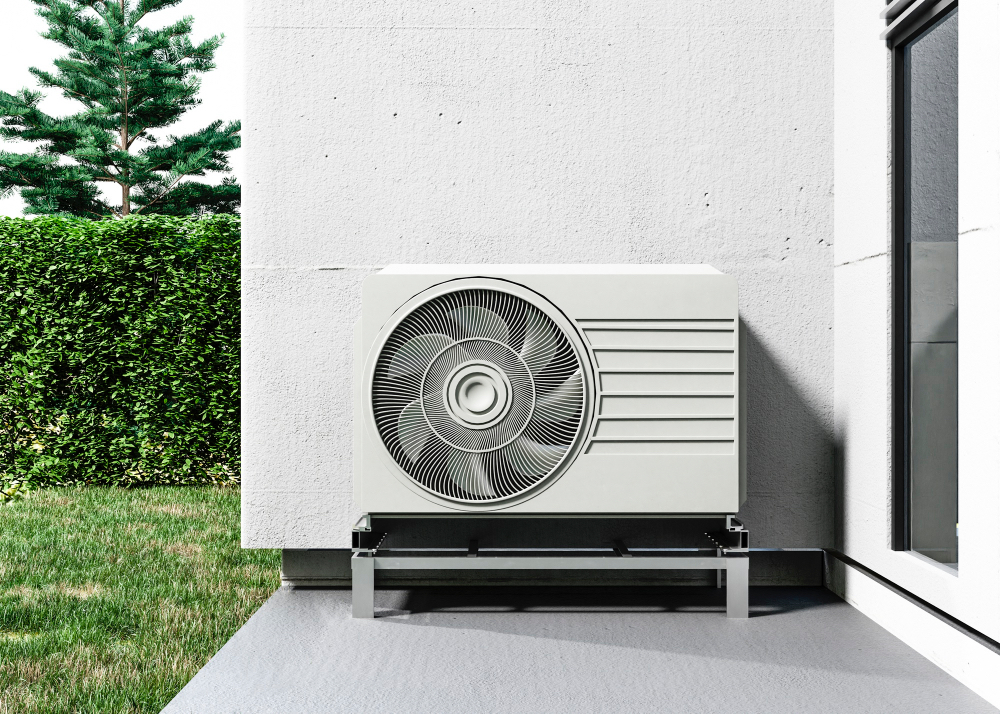
Air to air heat pumps are generally easier to install than ground source systems, as they do not require underground pipework. However, they still need careful planning to ensure correct sizing and placement of both indoor and outdoor units.
Indoor units are usually mounted on walls and should be positioned to allow even air distribution throughout the room. The outdoor unit needs good airflow and a suitable external space.
Professional installation, carried out by a professional team, is essential to ensure efficiency and long-term reliability.
What are the benefits of an air to air heat pump?
There are several advantages to installing an air to air heat pump system. These include:
- Lower running costs compared to traditional electric heating
- High energy efficiency
- Heating and cooling in one system
- Reduced carbon emissions
- Relatively quick installation
These benefits make them an attractive option for homes looking to improve energy performance.
So how does an air to air heat pump work?
An air to air heat pump works by extracting heat from the outside air, compressing it to increase its temperature, and then transferring it into the home to provide heating. In warmer months, the process can be reversed to provide cooling.
If you’re looking for a reputable, trusted team for your air to air heat pump, get in touch with ECO Home Insulation today.